Revolutionizing Software Development with LLMs
Introduction to LLMs in Software Development
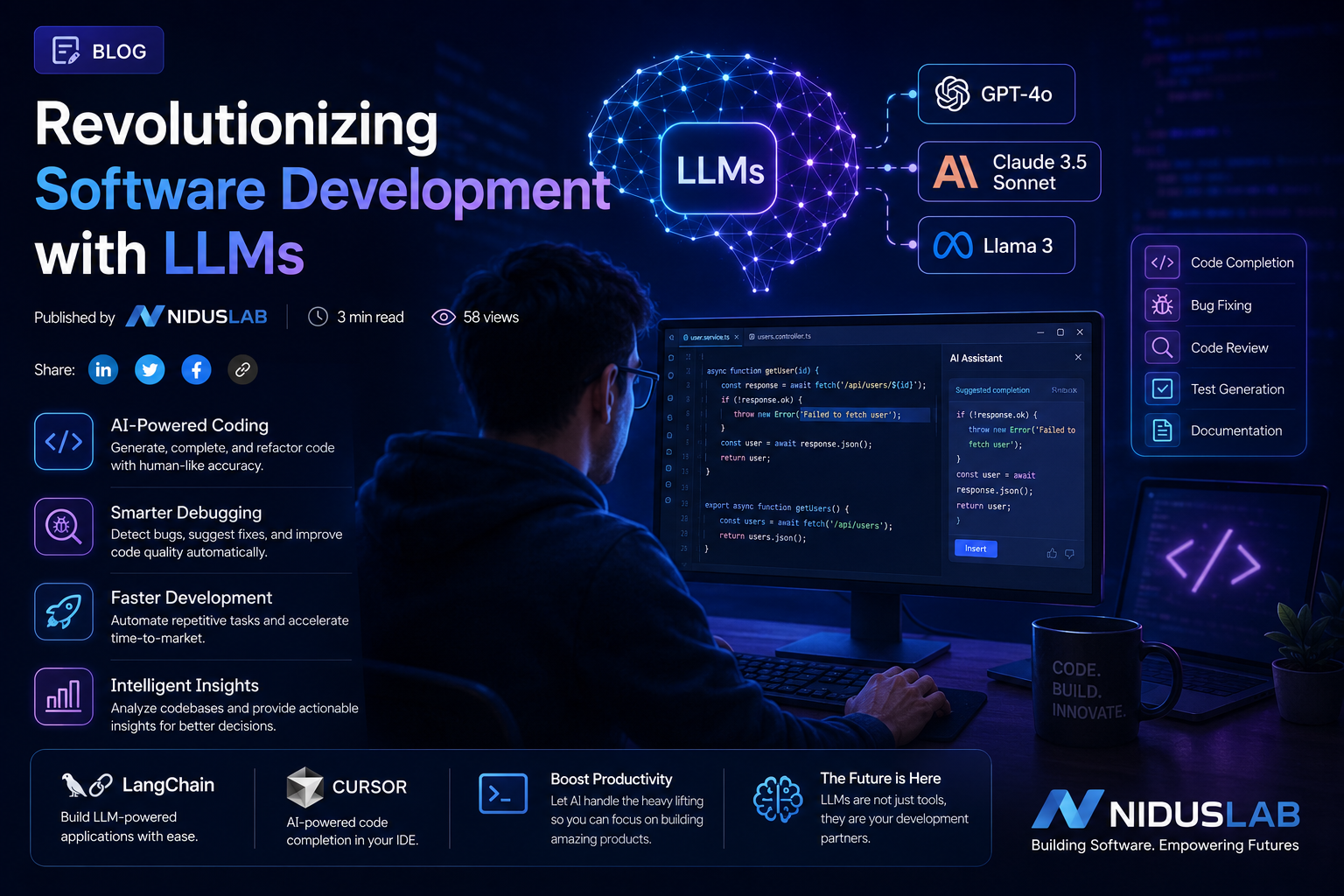
Large Language Models have been making waves in the tech industry, and their impact on software development is particularly significant. LLMs like GPT-4o, Claude 3.5 Sonnet, and Llama 3 have demonstrated unparalleled capabilities in understanding and generating human-like code, making them an attractive tool for developers.
The integration of LLMs in software development enables developers to automate tasks such as code completion, bug fixing, and testing, thereby streamlining the development process. Moreover, LLMs can analyze vast amounts of code, identify patterns, and provide insights that can help improve code quality and reduce errors.
For instance, LangChain, a popular framework for building LLM-powered applications, has been used to develop a range of tools, from code generators to automated testing frameworks. By leveraging such frameworks, developers can harness the power of LLMs to build more efficient, scalable, and maintainable software systems.
How LLMs Work in Software Development
At a high level, LLMs work by processing vast amounts of code data, learning patterns, and generating new code based on that knowledge. This process involves several key components, including data ingestion, model training, and inference.
During data ingestion, LLMs are fed a massive dataset of code, which can include open-source repositories, proprietary codebases, or even code snippets from the web. The model then learns to recognize patterns, relationships, and structures within the code, allowing it to generate new code that is similar in style and functionality.
Once trained, LLMs can be used for a variety of tasks, such as code completion, code review, and automated testing. For example, Cursor, a popular LLM-powered code completion tool, can suggest complete lines of code, functions, or even entire classes, saving developers time and effort.
Real-World Use Cases and Future Prospects
One notable example of LLMs in software development is the use of Llama 3 by a leading fintech company to automate the development of trading algorithms. By leveraging Llama 3's capabilities, the company was able to reduce the development time for new algorithms by over 70%, resulting in significant cost savings and improved time-to-market.
Looking ahead, the future of LLMs in software development is promising, with potential applications in areas such as DevOps, continuous integration, and continuous deployment. As LLMs continue to evolve and improve, we can expect to see even more innovative use cases and applications in the software development landscape.
To stay ahead of the curve, developers and organizations should focus on developing a deep understanding of LLMs, their capabilities, and their limitations. By doing so, they can unlock the full potential of LLMs and revolutionize the way they build, test, and deploy software applications.
Conclusion and Next Steps
In conclusion, LLMs are transforming the software development landscape, enabling developers to build, test, and deploy applications faster and more efficiently. As the technology continues to evolve, it's essential for developers and organizations to stay informed and adapt to the changing landscape.
For those looking to explore LLMs in software development, NidusLab offers a range of resources and services, from custom software development to AI-powered consulting. By partnering with NidusLab, organizations can harness the power of LLMs to drive innovation, improve efficiency, and stay ahead of the competition.